Sacramento commercial buildings face distinct challenges from hot dry summers that expand metal panels and cool wet winters that test seams and drainage. Properties in neighborhoods like East Sacramento and Land Park often feature older stock with flat or low-slope roofs that collect debris from nearby American River Parkway trees. Proper underlayment and thermal breaks prevent condensation issues that appear after the first heavy rains. Metal systems must account for wind patterns along the American River and thermal movement on larger footprints common in South Sacramento and North Sacramento.
Standing seam and screw-down metal panels perform well here when fastened to account for Sacramento County seismic requirements and wind loads near the California State Capitol area. Installers check for hidden rot in older commercial structures around Old Sacramento where moisture lingers. Edge details at parapets and penetrations require extra flashing because summer heat accelerates sealant breakdown. Crews also verify that new metal roofs tie correctly into existing HVAC curbs common on retail and office buildings in Rancho Cordova and Citrus Heights.
Drainage redesign often becomes necessary during commercial roof replacement when original scuppers prove undersized for winter storms. In Midtown and Downtown Sacramento, tight access and adjacent historic buildings limit crane use, so panel staging happens from the street with careful coordination. Metal roof installation crews confirm that insulation upgrades meet current energy codes while preserving roof height clearances for rooftop equipment typical on Sacramento commercial properties.
Technician insight
In Sacramento, the thing that catches most people out with Commercial Roofing is how the shift from hot dry summers to cool wet winters causes rapid sealant failure around rooftop curbs if the original installer skipped proper backer rod and counter-flashing on older buildings in East Sacramento and Oak Park.
Office Building Roof in Midtown Sacramento
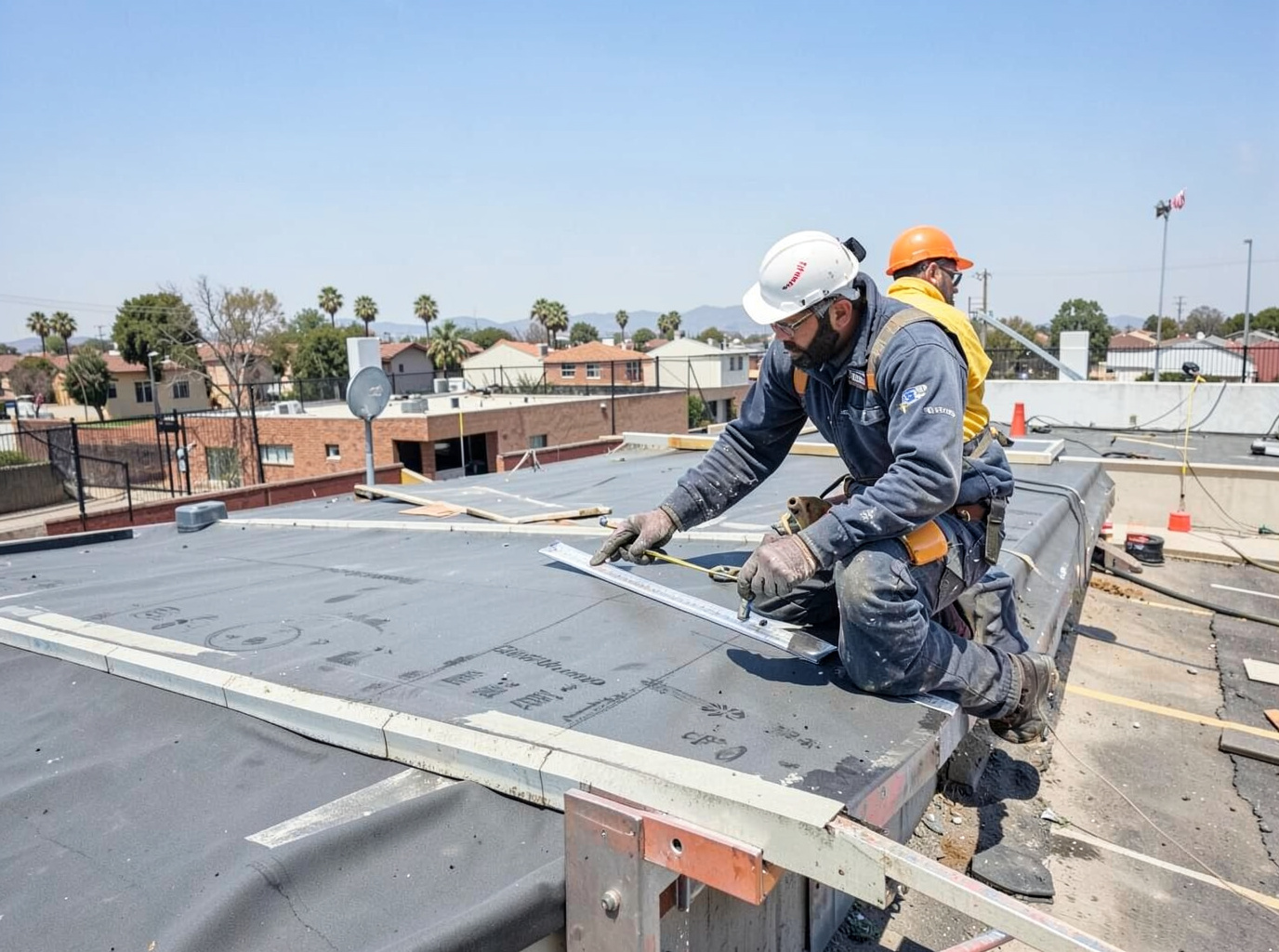
Leaks appeared around HVAC curbs on a two-story office building during winter rains. Inspection showed failed sealant and inadequate flashing from prior work. Crews replaced the affected section with new metal panels and custom curbs designed for Sacramento temperature swings. Drainage improved and no further leaks occurred the following season.
Commercial Roofing Services We Offer
✓Metal Roof Installation
Durable standing seam and corrugated metal systems installed on commercial buildings in Sacramento to withstand summer heat expansion and winter rain.
✓Commercial Roof Replacement
Full removal and replacement of aging commercial roofs with metal options suited to Sacramento County wind and seismic conditions.
✓Flat Roof Membrane Upgrades
TPO and EPDM membrane systems applied over existing commercial decks with improved drainage for wet Sacramento winters.
✓Standing Seam Metal Roofing
Hidden fastener metal panels installed on sloped commercial roofs in areas like Land Park and East Sacramento for long-term leak resistance.
✓Rooftop Equipment Curb Sealing
Custom flashing and curb details around HVAC units common on Sacramento commercial buildings to prevent winter moisture intrusion.
Commercial Roofing Cost in Sacramento, CA
| Service | Typical Range | What Affects It |
|---|---|---|
| Commercial Metal Roof Installation | $8–$15 per sq ft | Varies with panel type, slope, and access in Midtown or Downtown Sacramento. |
| Full Commercial Roof Replacement | $10–$18 per sq ft | Includes tear-off; higher on multi-story buildings near the State Capitol. |
| Flat Roof Membrane Upgrade | $6–$12 per sq ft | Depends on existing deck condition and drainage work needed. |
| Rooftop Curb And Penetration Flashing | $1,200–$3,500 | Per major HVAC unit; common on retail properties in Rancho Cordova. |
Ranges are typical for Sacramento, CA and confirmed with an exact written quote before any work starts.
How it works
- 1
Site Assessment
Walk the roof and inspect structure, drainage, and penetrations on the Sacramento commercial property.
- 2
Material Selection
Choose metal gauge and coating based on building use, slope, and exposure to local summer heat and winter rain.
- 3
Preparation And Removal
Remove old roofing, repair decking, and install new underlayment and insulation where needed.
- 4
Installation And Detailing
Install panels, flash all edges and curbs, then verify seams and drainage before final walkthrough.
Pricing
Pricing depends on building size, roof complexity, and access in downtown or older neighborhoods; upfront written estimates provided.