
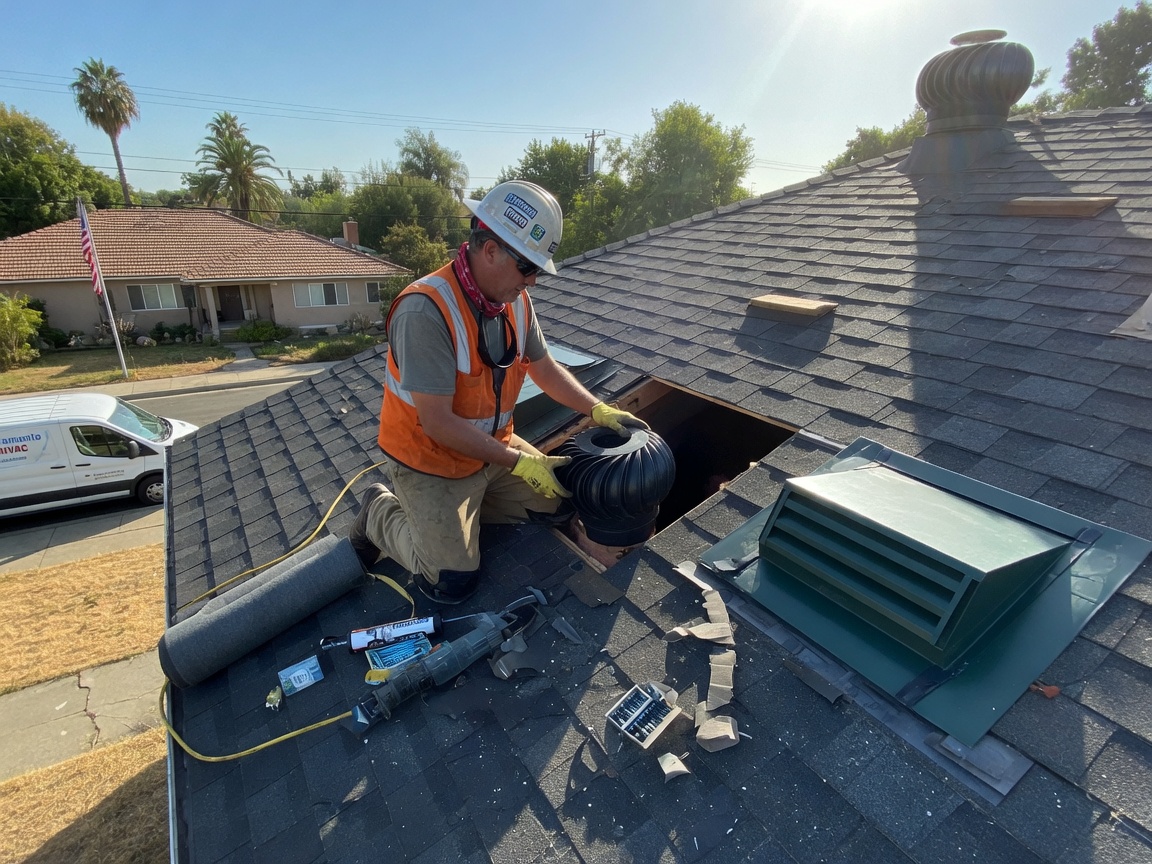
Sacramento summers push attic temperatures well past 130 degrees in homes across East Sacramento and Land Park, where many 1920s–1950s houses still rely on original or missing venting. Without balanced intake and exhaust, metal roof decks overheat, shortening shingle or panel life and driving up cooling costs. Cool wet winters then introduce condensation when warm interior air meets cold roof planes, especially on the north-facing slopes common in Midtown and Oak Park. Proper ventilation equalizes pressure and removes moisture before it soaks insulation or rusts metal fasteners.
Installation work here must account for the tight rafter bays and limited soffit depth found in North Sacramento and South Sacramento tract homes. Ridge vents must be cut precisely to avoid compromising the structural ridge board, while turbine or solar-powered units require secure flashing that holds up to winter wind-driven rain off the American River Parkway. Code requires net free ventilation area calculations based on attic square footage, and inspectors in Sacramento County check for blocked soffits or oversized exhaust that creates negative pressure. Crews at 901 H St routinely add baffles and insulation dams to keep intake paths clear without disturbing existing ceiling insulation.
Metal roof projects in Rancho Cordova and Citrus Heights often combine new standing-seam panels with upgraded ventilation because the original builder vents were sized for asphalt shingles only. Adding continuous ridge venting along with continuous soffit intake prevents the oil-canning and thermal expansion issues that appear when heat builds under dark metal. Homeowners in Downtown Sacramento and West Sacramento frequently request low-profile vents that preserve the historic rooflines near the State Capitol and Sutter's Fort while still meeting current airflow standards.
Technician insight
In Sacramento the thing that catches most people out with Roof Ventilation Installation is the shallow soffits on 1940s–1960s homes in Oak Park and North Sacramento. You cannot just slap on a ridge vent without adding real intake or the attic stays pressurized and pulls rain under the metal panels during our winter storms.
East Sacramento Metal Roof Ventilation Upgrade
A 1952 bungalow had no working soffit vents and a single rusted turbine that failed during summer heat. We found insulation blocking the few existing openings and moisture stains on the north rafters from winter condensation. We added continuous ridge venting plus new screened soffit intake while installing the new metal roof. The attic now stays 25–30 degrees cooler and the homeowner reports no more musty smells after rains.
Roof Ventilation Installation Services We Offer
✓Ridge Vent Installation
Cut-in ridge venting along the peak provides continuous exhaust for hot air in Sacramento summers while maintaining a low-profile look on metal roofs.
✓Soffit Ventilation Upgrades
Adding or enlarging soffit vents ensures intake air reaches the attic in older Land Park and East Sacramento homes with limited original openings.
✓Turbine Vent Installation
Wind-driven turbine vents pull hot air from attics in Midtown and Oak Park properties where electric power runs are difficult to add.
✓Power Attic Fan Installation
Thermostatically controlled power fans deliver reliable exhaust during Sacramento's prolonged heat waves when passive venting alone cannot keep up.
✓Gable Vent Integration
Installing or repairing gable-end vents works with existing ridge systems in North Sacramento homes that have limited roof slope for ridge venting.
Roof Ventilation Installation Cost in Sacramento, CA
| Service | Typical Range | What Affects It |
|---|---|---|
| Ridge vent installation (per 10 linear feet) | $450–$750 | Higher when cutting through existing metal panels or adding baffles in tight attics. |
| Soffit vent upgrade (per side) | $300–$550 | Depends on fascia depth and need for new intake screening in older homes. |
| Turbine or power fan install | $600–$950 | Includes wiring or curb flashing; higher on two-story homes in Midtown. |
| Full ventilation assessment and plan | $150–$250 | Waived if work proceeds. |
Ranges are typical for Sacramento, CA and confirmed with an exact written quote before any work starts.
How it works
- 1
Attic Assessment
Measure existing ventilation, inspect insulation and rafter bays, and calculate required net free area based on the home's square footage and roof type.
- 2
Venting Plan
Select vent types and locations that match the roof pitch, metal panel profile, and neighborhood aesthetics while meeting Sacramento County airflow requirements.
- 3
Installation
Cut openings, install baffles or vents, flash all penetrations, and integrate with existing or new metal roofing to prevent leaks during winter rains.
- 4
Final Balance Check
Verify intake and exhaust are balanced, test any powered units, and confirm no insulation blocks airflow paths.
Pricing
Pricing varies with roof access, number of vents, and whether work is paired with metal roof replacement.